
certificate course on: Principles of Oceanography
Upon completion of the Principles of Oceanography certificate course, participants will be able to understand the fundamental physical, chemical, biological and geological processes governing the ocean and their interactions with the atmosphere, climate and coastal systems; assess key marine and coastal hazards and environmental challenges, including cyclones, sea-level rise, pollution and ecosystem degradation; apply practical tools and techniques such as satellite remote sensing, marine GIS, oceanographic data analysis, environmental sampling, weather-chart interpretation, cyclone tracking, acoustic sonar and marine seismic methods; appreciate the role of ocean science in marine spatial planning, maritime governance, offshore activities and the sustainable blue economy; and explore emerging approaches including ocean modelling, satellite oceanography, artificial intelligence, marine data science and Digital Twins of the Ocean. Through practical exercises, field visits and a capstone mini-project, participants will develop the capacity to apply interdisciplinary ocean knowledge to real-world challenges relevant to Bangladesh’s marine and coastal environment.
Certificate Course on Principles of Oceanography
Build a strong foundation in ocean science, explore practical applications, and understand Bangladesh’s marine and coastal environment.
🎯 Target Audience
This course is designed for:
***Researchers and professionals working in oceanography, marine science, environmental science, climate change, coastal management, fisheries, geology, meteorology, GIS, remote sensing, disaster management, maritime affairs and related fields.
***Government and non-government officers seeking to strengthen their understanding of marine and coastal systems.
***University students from relevant departments who wish to develop interdisciplinary knowledge of ocean science and its applications.
Individuals interested in blue economy, marine conservation, coastal resilience, marine spatial planning and sustainable ocean development.
✅ Eligibility
Professional Candidates
***Must be a graduate in a relevant discipline and currently working as a full-time researcher or officer in a government or non-government institution.
Student Candidates
***Must be enrolled as a full-time student at a recognized university in a relevant department or institute.
🌊 Key Benefits
Participants will have the opportunity to:
***Understand ocean science fundamentals across physical, chemical, biological and geological oceanography.
***Explore ocean–atmosphere interactions, climate variability, cyclones, storm surges, coastal hazards and sea-level rise.
***Learn about marine biodiversity, pollution, microplastics, ocean acidification and blue carbon.
***Develop exposure to practical tools, including satellite remote sensing, marine GIS, oceanographic data analysis, weather-chart interpretation and cyclone tracking.
***Gain insight into marine spatial planning, integrated coastal zone management, blue economy, offshore activities and maritime governance.
***Explore emerging fields such as ocean modelling, satellite oceanography, artificial intelligence, marine data science and Digital Twins of the Ocean.
***Participate in hands-on practical sessions, institutional field visits and a capstone mini-project connecting knowledge to real-world ocean and coastal challenges.
***Learn from academics, scientists, government officials and technical experts from leading institutions.
🏅 Certification
Certificate of Completion
Participants who successfully complete the course requirements will receive a certificate from the National Oceanographic and Maritime Institute (NOAMI).
The course concludes with a comprehensive knowledge synthesis, feedback session and certificate award ceremony.
Note: Specific certificate eligibility requirements, such as attendance, participation and capstone-project completion, should be stated in the final course regulations or participant handbook before enrollment.
💳 Course Fees
Participant Category | Course Fee
Professional Candidates | BDT 15,500
Student Candidates | BDT 10,500
Female Candidates | 10% fee waiver
📅 Schedule Routine Overview
Every Monday and Wednesday
Time: between 5 to 8 PM
Curriculum & Scheduled Modules
Session No Session Topic Title Pedagogical Format
Session 01 Course Orientation, Inaugural Session & NOAMI Institutional Milestones Classroom/Hybrid
Session 02 Lecture 01: Introduction to Oceanography and Earth Systems Lecture
Session 03 Lecture 02: Ocean Observation Systems, Instrumentation Lecture
Session 04 Lecture 03: Physical Properties of Seawater and Thermodynamics Lecture
Session 05 Lecture 04: Ocean Waves, Tides and Circulation Dynamics Lecture
Session 06 Lecture 05: Chemical Oceanography and Seawater Composition Lecture
Session 07 Lecture 06: Marine Biogeochemical Cycles, Ocean Acidification and Blue Carbon Lecture
Session 08 Lecture 07: Estuarine Oceanography, Salinity Intrusion and Mixing Lecture
Session 09 Lecture 08: Marine Geology, Seafloor Morphology and Plate Tectonics Lecture
Session 10 Lecture 09: Geology of Bangladesh, Bengal Basin Evolution and Dynamic Continental Shelf Lecture
Session 11 Institutional Field Visit 1: Geological Survey of Bangladesh (GSB) Marine & Mineralogy Labs Field Visit
Session 12 Lecture 10: Ocean-Atmosphere Interaction and the Indian Monsoon System Lecture
Session 13 Lecture 11: Climate Variability and Changes of Ocean and Crysphere Lecture
Session 14 Lecture 12: Tropical Cyclones and Storm Surges in the Bay of Bengal Lecture
Session 15 Lecture 13: Coastal Hazards, Shoreline Dynamics and Sea-Level Rise Lecture
Session 16 Lecture 14: Multi-Hazard Early Warning Systems and Coastal Ocean Forecasting Lecture
Session 17 Lecture 15: Disaster Management Framework and Risk Reduction in Bangladesh Lecture
Session 18 Institutional Field Visit 2: Bangladesh Meteorological Department (BMD) Storm Warning Centre Field Visit
Session 19 Practical Lab: Synoptic Weather Chart Analysis and Cyclone Track Plotting Hands-on Lab
Session 20 Lecture 16: Marine and Coastal Biodiversity of Bangladesh Lecture
Session 21 Lecture 17: Sundarbans, Coastal Ecosystem Conservation and Nature-Based Solutions (NbS) Lecture
Session 22 Capstone Mini-Project Session 1: Topic Selection, Problem Formulation & Group Allocations Workshop
Session 23 Lecture 18: Marine Pollution, Plastics and Microplastic Contamination Lecture
Session 24 Lecture 19: Radioactivity, Heavy Metals and Marine Environmental Contamination Lecture
Session 25 Lecture 20: Marine Spatial Planning (MSP) and Ecosystem-Based Management Lecture
Session 26 Lecture 21: Integrated Coastal Zone Management (ICZM) and Coastal Infrastructure Lecture
Session 27 Lecture 22: Blue Economy and Sustainable Marine Fisheries Lecture
Session 28 Lecture 23: Marine Renewable Energy and Marine Biotechnology Lecture
Session 29 Lecture 24: Offshore Engineering and Hydrographic Survey Lecture
Session 30 Lecture 25: Offshore Oil & Gas and Marine Geophysical Exploration Lecture
Session 31 Lecture 26: Satellite Oceanography and Remote Sensing Lecture
Session 32 Lecture 27: Marine GIS and Geospatial Applications in Oceanography Lecture
Session 33 Lecture 28: Ocean Modeling and Numerical Oceanography Lecture
Session 34 Lecture 29: Digital Twin of the Ocean (DTO), AI and Marine Data Science Lecture
Session 35 Lecture 30: Maritime Governance, Law of the Sea and Ocean Security Lecture
Session 36 Capstone Mini-Project Session 2: Group Project Mentorship and Mid-Term Progress Review Mentorship
Session 37 Capstone Mini-Project Session 3: Final Project Presentations & Defense Jury Presentation
Session 38 Final Comprehensive Knowledge Synthesis, Feedback & Certificate Award Ceremony Valedictory
The detailed session-by-session timetable is released upon batch enrollment.
Resource Persons & Instructors
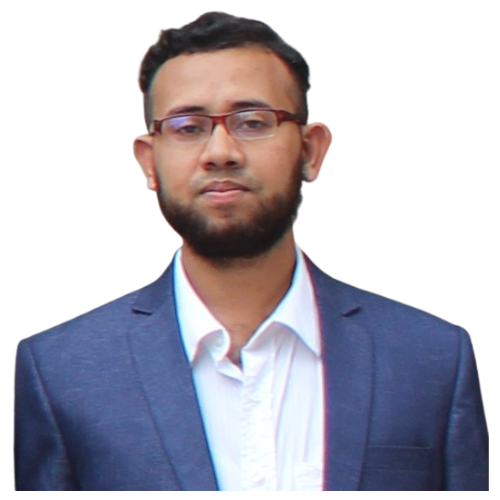
Md. Alamgir Hossain
Certificate of Completion
Official NOAMI Institutional Accredited Certificate
Upon successful completion of the course lectures, practical sessions, assignments, and passing the final assessment (with a minimum of 70% attendance), participants are conferred an authorized NOAMI Certificate with a secure verifiable QR code and serial key.
🎯 Assessment & Grading
- Active Lecture Attendance (≥ 70%)
- Weekly Practical / Lab Submissions
- Final Examination or Capstone Review
🔍 Instant Online Verification
Each certificate carries an encrypted digital hash code and QR identifier, allowing universities, employers, and research organizations to authenticate credentials 24/7 on the NOAMI verification registry.
Frequently Asked Questions
Students, faculty, researchers, civil and defense maritime officers, and registered NOAMI members are eligible. Specific course prerequisites, if any, are listed under the Program Overview.
Once your application is approved or enrolled, navigate to your Member Dashboard → My Trainings to view the classroom roadmap, live video meeting links, and downloadable reading materials.
Most institutional capacity-building workshops conducted by NOAMI are fully funded or heavily subsidized. Any required registration fee is displayed clearly in the course summary.